Almost Doesn't Count — Except in Your Brain, Where It Counts for Everything
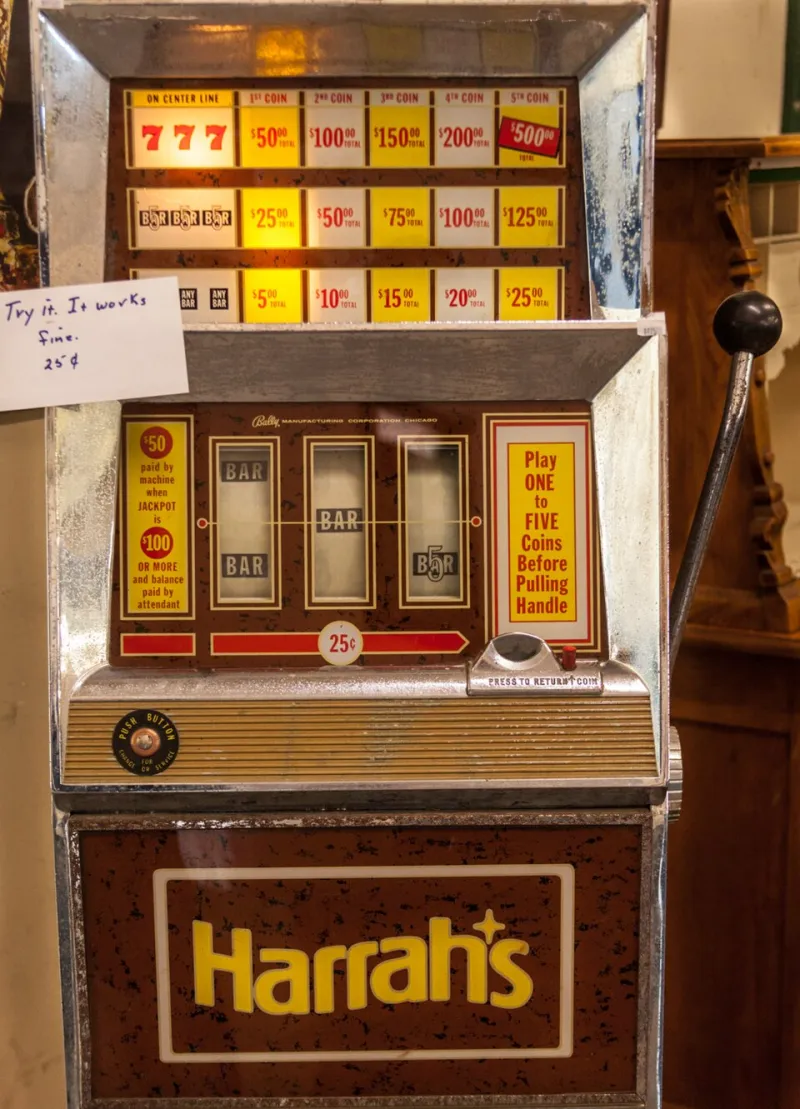
Photo: Paul VanDerWerf from Brunswick, Maine, USA, CC BY 2.0, via Wikimedia Commons
You've been there. Three reels spinning, two sevens locked in, and then — a cherry. Not even close, technically. But it felt close. It felt so close that you hit spin again before you'd even fully processed what happened. That's not a coincidence, and it's definitely not bad luck playing tricks on you. That's your brain doing something genuinely strange, and once you understand it, you'll never look at a near-miss the same way again.
The Reward System Doesn't Know You Lost
Here's where things get interesting. Neuroscientists studying gambling behavior have found that near-miss outcomes — situations where a player comes within one position or one number of a big payout — activate the brain's dopamine pathways in a pattern that closely resembles what happens during an actual win. Not a loss. A win.
Dopamine, the neurotransmitter most people associate with pleasure and reward, surges during near-miss moments even though the objective result is financially identical to any other loss. Your wallet didn't get any heavier. Your chip stack didn't grow. But your brain logged the event as something worth paying attention to, something that almost happened and therefore might happen next time.
This is sometimes called the "near-miss effect," and it's been documented in brain imaging studies, behavioral research, and even animal studies going back decades. The short version: your brain is a terrible accountant but a very enthusiastic optimist.
Why 'Almost' Hits Different Than 'Not Even Close'
Think about the difference between spinning and getting zero matching symbols versus spinning and landing two out of three. Objectively, both outcomes pay out nothing. But emotionally — and neurologically — they register completely differently.
Researchers at Cambridge University found that near-misses actually increase the motivation to keep playing, even when participants intellectually understood that the near-miss had no predictive value for future outcomes. The brain's anterior cingulate cortex, which is involved in decision-making and error detection, lights up during these moments. It essentially files the near-miss as "incomplete" rather than "failed," nudging the player toward another attempt to resolve that unfinished feeling.
It's the same basic mechanism that makes you want to finish a song you've heard half of, or why leaving a movie before the ending is genuinely uncomfortable. The brain craves closure. A near-miss denies that closure while dangling it just out of reach.
Gaming Design and the Architecture of Almost
Now here's the part that deserves some honest conversation. Modern slot machines and digital gaming platforms aren't designed in a vacuum. The people building these experiences have access to the same research you're reading right now — and in many cases, far more detailed proprietary data on player behavior.
In physical slot machines, the mechanical reels of old have been replaced by virtual reels mapped to a random number generator. This allows game designers to control how frequently near-miss outcomes appear on the visible display, independent of the actual probability of winning. In other words, a machine can be programmed to show a near-miss more often than pure randomness would produce, without actually changing the odds of a real jackpot.
Regulators in some states have pushed back on the most aggressive versions of this practice, but the broader principle — designing experiences that leverage near-miss psychology — remains deeply embedded in how many games are built. That's not a conspiracy theory; it's a documented aspect of game design that's been discussed openly in industry conferences and academic literature.
Online platforms have taken this even further, using engagement analytics to study exactly where players drop off and what keeps them in a session longer. Near-miss frequency is one of the levers available to tune that retention.
What This Means for You at the Table
None of this means you should stop playing games you enjoy. But it does mean you're going in with a clearer picture of the psychological landscape. Here's what that clarity can actually do for you:
Recognize the spike for what it is. When you feel that particular electric frustration after a near-miss, try to name it. "That's my dopamine system responding to an incomplete pattern, not a signal that I'm due for a win." It sounds clinical, but naming the feeling creates a small but real cognitive distance between the impulse and the action.
Set your session limits before you spin, not after. Near-miss moments are specifically the worst time to make decisions about whether to keep playing, because your brain is in a heightened state that makes continuation feel logical and necessary. Decide your limits when you're calm, and treat them as fixed.
Separate the entertainment from the expectation. There's genuine fun in the tension of a spin, in the visual and audio design of a well-made game, in the social energy of a live table. That enjoyment is real and legitimate. The problem comes when the near-miss starts feeling like a promise rather than a coincidence.
The Flip Side: Near-Misses Aren't All Bad
It's worth noting that not everyone responds to near-misses the same way. Research suggests that players who score higher on measures of problem gambling tend to show stronger neurological and behavioral responses to near-misses than casual players. For most people playing recreationally with defined budgets, the near-miss effect is more of a curiosity than a crisis.
Some players even report that understanding the mechanism takes some of the sting out of it. When you know your brain is doing something predictable and well-documented, the near-miss becomes less personally meaningful. It stops feeling like the universe teasing you and starts feeling like... a reel stopping on a cherry.
The Smartest Spin Is an Informed One
At WinPH777, we think the best players are the ones who understand the game at every level — the rules, the odds, and yes, the psychology baked into the experience. Knowing that near-misses are engineered to feel significant doesn't ruin the fun. If anything, it puts you in the driver's seat instead of the passenger seat.
The sevens will line up when they line up. Until then, that cherry isn't a sign. It's just a cherry.