When the Cards Go Cold: How Smart Players Flip a Losing Streak Into a Strategic Reset
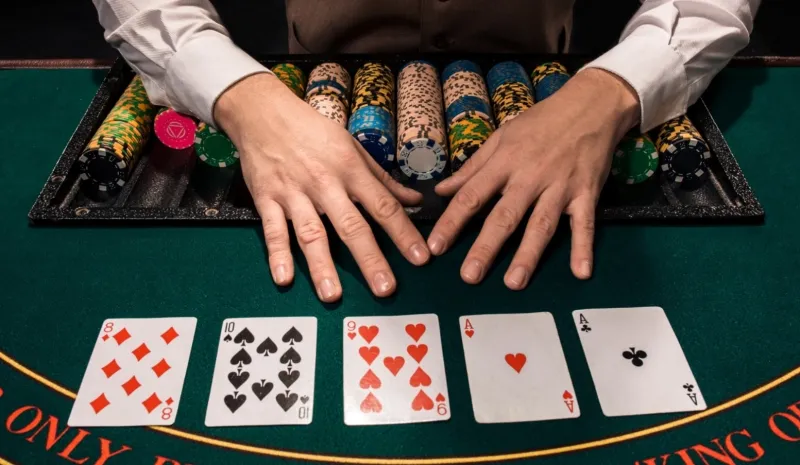
Photo: poker player thinking strategically at casino table with chips, via www.myzeo.com
It happens to everyone. You log in with a solid bankroll, a clear head, and what feels like decent instincts — and then the session goes sideways. Then the next one does too. And the one after that. Before long, you're not just dealing with a bad night. You're in a streak, and streaks have a way of messing with your head in ways that individual losses never really do.
The difference between players who spiral and players who survive — and eventually come back stronger — isn't luck. It's discipline, self-awareness, and a very specific set of mental habits that treat a cold streak not as a crisis, but as information.
Here's what the experienced crowd already knows.
The Trap That Catches Almost Everyone
The instinct to chase losses is practically hardwired into the human brain. Behavioral economists call it loss aversion — the psychological reality that losing $100 feels roughly twice as painful as winning $100 feels good. When you're down, your brain doesn't want to stop and analyze. It wants to recover. Fast.
That impulse is exactly what separates recreational players from strategic ones. Chasing losses isn't just a financial mistake — it's an emotional one. You're no longer playing the game in front of you. You're playing against the ghost of what you already lost, and that ghost always has the edge.
Seasoned bettors recognize the chase for what it is: a panic response dressed up as a plan.
Step One — The Hard Stop
Every experienced player has some version of a hard stop rule, and it's non-negotiable. When a session hits a predetermined loss threshold — whether that's 20% of your bankroll, a flat dollar amount, or a set number of losing rounds — you stop. Not "one more spin to turn it around." Not "just until I get back to even." You stop.
This isn't defeatism. It's the most strategic move you can make in a bad session. Walking away while you still have meaningful resources intact is how you preserve the ability to play another day — literally.
Think of it like a football coach pulling a quarterback who's having an off game. The decision isn't about punishment. It's about protecting the team's ability to compete.
Step Two — Treat the Data, Not the Emotion
Once you've stepped away, the real work begins. And it's not what most people expect.
Instead of replaying the session emotionally — second-guessing every bet, calculating what you should have done — experienced players treat a losing streak as a data collection event. They ask practical questions: Was I playing outside my bankroll comfort zone? Did I change my bet sizing mid-session when I got frustrated? Was I distracted — tired, hungry, half-watching a game on the side screen?
These aren't excuses. They're diagnostics. A losing streak almost always contains useful information about where your process broke down, and that information is only available if you approach it with some emotional distance.
Keeping a simple session log helps enormously. Nothing elaborate — just the date, game type, starting bankroll, ending bankroll, and one honest note about your headspace. Over time, patterns emerge that have nothing to do with luck.
The Bankroll Reset Ritual
One of the most underrated moves in a serious player's toolkit is the deliberate bankroll reset. After a rough stretch, many experienced bettors don't just take a break from playing — they take a break from thinking about playing. Two or three days away from the platform entirely, followed by a fresh session with a clearly defined, comfortable stake.
This reset serves two purposes. First, it breaks the emotional momentum of the streak. Second, it reestablishes your relationship with the game on your terms, not the streak's terms.
The size of your reset bankroll matters, too. Coming back with an amount you're genuinely comfortable losing — not an amount you need to win back — changes your entire psychological posture at the table. You're relaxed. You're patient. And relaxed, patient players make better decisions.
Strategic Patience vs. Passive Waiting
There's an important distinction that often gets lost in conversations about losing streaks: strategic patience is not the same thing as passively waiting for luck to turn.
Strategic patience means you have a specific plan. You've identified the conditions under which you'll return to play. You've set clear session limits that you'll actually honor. You've chosen games and bet sizes that match your current bankroll reality, not your pre-streak bankroll.
Passive waiting is just hoping things get better. It often leads to returning too soon, playing emotionally, and extending the streak further.
The players who consistently recover from cold runs share one common trait: they treat their return to the platform as a deliberate choice, not a compulsion.
Reframing the Streak Itself
Here's the mental shift that might be the most powerful of all: a losing streak doesn't mean you're bad at this. It means variance is real, and variance is a feature of every game of chance and skill in existence.
Even the sharpest sports bettors in Las Vegas go through losing months. Poker professionals — people who play this game for a living — document stretches of weeks where nothing goes right. The streak isn't evidence of failure. It's evidence that you're playing in an environment where outcomes are genuinely uncertain.
What you can control is your process. And when you focus on process over results, a losing streak stops feeling like a verdict and starts feeling like a phase.
The Comeback Isn't a Single Big Win
One last thing worth saying clearly: the comeback from a losing streak rarely looks like one dramatic winning session that wipes out all the losses in a single night. That's the movie version. Real recovery is quieter and more gradual.
It's a series of disciplined sessions where you stuck to your limits. It's a string of smaller wins that slowly rebuild your bankroll and, more importantly, your confidence. It's the feeling of being back in control of how you play — which is the only thing you were ever actually in control of to begin with.
At WinPH777, the game is always there when you're ready. The question is whether you're ready — and that's a question only honest self-assessment can answer.
The cold streak ends. It always does. How you navigate it determines everything about what comes next.