Doubling Down on Desperation: The Psychology of Chasing Losses and How Winning Players Think Differently

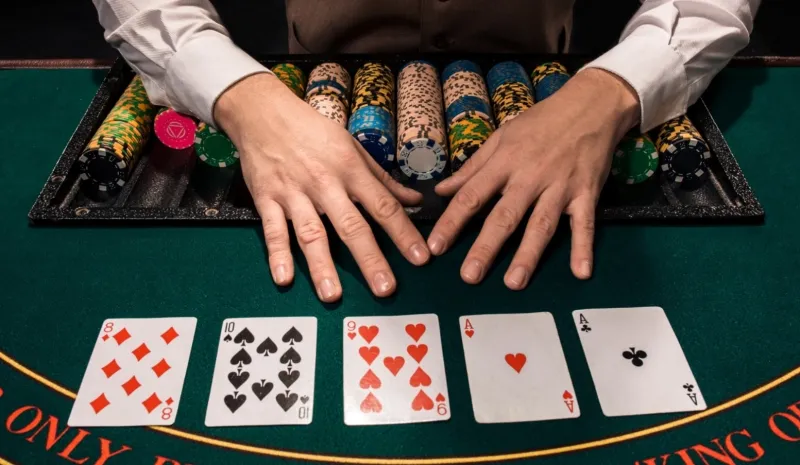
Photo: stressed man looking at casino chips and money on table making decision, via spider145hqs.com
There's a moment every player recognizes, even if they'd rather not admit it. You've dropped a few rounds, the session is bleeding out, and your brain quietly whispers: one bigger bet and you're back to even. It feels rational. It feels almost mathematical. And that's exactly what makes it so dangerous.
Loss chasing — the behavior of increasing bet size after a losing streak in an attempt to recover — is one of the most documented patterns in gambling research and one of the most misunderstood by the people doing it. It doesn't feel like a trap in the moment. It feels like a strategy.
Why Bigger Bets Feel Justified After a Loss
The neurochemistry here is worth understanding, because it's not a character flaw — it's biology doing what biology does.
When you lose money, your brain registers it as a threat. Cortisol spikes. The amygdala — the part of your brain that handles fear and urgency — gets louder. At the same time, your prefrontal cortex, which handles long-term reasoning and impulse control, starts losing the argument. The result is a mental state that researchers sometimes call "loss-induced risk escalation." In plain English: losing makes you want to gamble more aggressively, not less.
Dopamine plays a role too. Every near-win, every small recovery, sends a little hit of it through your system. Your brain starts associating bigger bets with bigger potential relief — not just financial, but emotional. The bet stops being about money and starts being about fixing the way you feel.
This is the core of the trap. The decision to chase losses feels like it's coming from logic, but it's almost entirely emotional.
The Classic Pattern: How a $50 Session Becomes a $500 Disaster
Consider a pretty standard recreational player scenario — someone sitting down with $100 on a Saturday night, planning to keep it casual. They lose $50 in the first forty minutes. Nothing unusual. But then comes the pivot.
Instead of reassessing, they double their usual bet size. Not because the odds changed. Not because they have new information. But because they're now playing to recover, not to enjoy. The original goal — a fun session with reasonable stakes — has been quietly replaced by a new one: get back to zero.
That shift in goal is everything. Once a player is chasing, they're no longer making independent decisions about each hand or spin. They're making one continuous emotional decision: I need to undo what just happened. And that's a losing framework regardless of what game you're playing.
The math doesn't help either. To recover a 50% loss, you need a 100% gain. Players rarely do that math in the moment. They just feel like they're "almost back" when they're actually much further away than when they started.
What Disciplined Players Do Differently
Here's the thing that separates recreational players from people who actually manage to come out ahead over time: the disciplined bettors aren't emotionally attached to any single session.
That sounds simple. It's genuinely hard to practice.
Strategic players treat their bankroll the way a small business owner treats operating capital. A bad week doesn't mean you liquidate everything and gamble the rent money to get back to last month's numbers. It means you review what happened, adjust if necessary, and protect what you have left.
Some specific behaviors that show up consistently among players who survive downswings:
Pre-set loss limits that are actually respected. Not "I'll stop if it gets bad" — a specific number, decided before the session starts, that triggers an automatic stop. This removes the in-session emotional negotiation entirely.
Flat betting during losing streaks, not escalation. When things are going sideways, the move is to reduce exposure, not increase it. Disciplined players often drop their bet size during downswings to extend their session and give variance time to normalize.
Separating sessions mentally. Last night's loss doesn't follow you into tonight's game. Each session starts fresh, with its own budget, its own goals, and no emotional debt carried over from previous play.
Knowing the difference between a bad session and a bad strategy. Sometimes you lose because variance went against you. Sometimes you lose because you were making poor decisions. Disciplined players do the honest work of figuring out which one it was.
The Comeback That Isn't: Why Emotional Recovery Bets Usually Fail
Here's the uncomfortable truth that most players don't want to sit with: the big recovery bet almost never works the way it's supposed to.
Not because of bad luck, exactly. But because players chasing losses are typically in a compromised mental state when they make those bets. They're stressed, they're reactive, and they're focused on a specific outcome rather than making good decisions. That's not a setup for success in any competitive or probabilistic environment.
When it does work — when the big bet lands and a player claws back to even — it often reinforces the behavior rather than ending it. The brain logs it as: escalating worked. Which means the next losing streak triggers the same response, usually at higher stakes.
The wins that come from chasing losses aren't really wins. They're just delayed losses with extra emotional volatility built in.
Building a Different Relationship With Downswings
At WinPH777, we're not here to lecture anyone about how they spend their money or their time. But we do think there's a more interesting way to engage with gaming than just riding the emotional rollercoaster until the bankroll runs out.
Downswings are part of every player's experience. The question isn't how to avoid them — you can't. The question is how you respond when they show up.
The players who last the longest, who actually enjoy gaming as a sustained hobby rather than a series of crises, are the ones who treat a losing session as neutral data rather than a personal emergency. They don't need to fix it tonight. They don't need to make it mean something.
Sometimes the most strategic move you can make is logging off, getting some sleep, and coming back tomorrow with a clear head and a fresh budget. That's not quitting. That's playing smart.
The house doesn't need you to chase your losses. Don't do its job for it.