Hardwired for Sevens: How Your Brain Turns a Number Into a Ritual

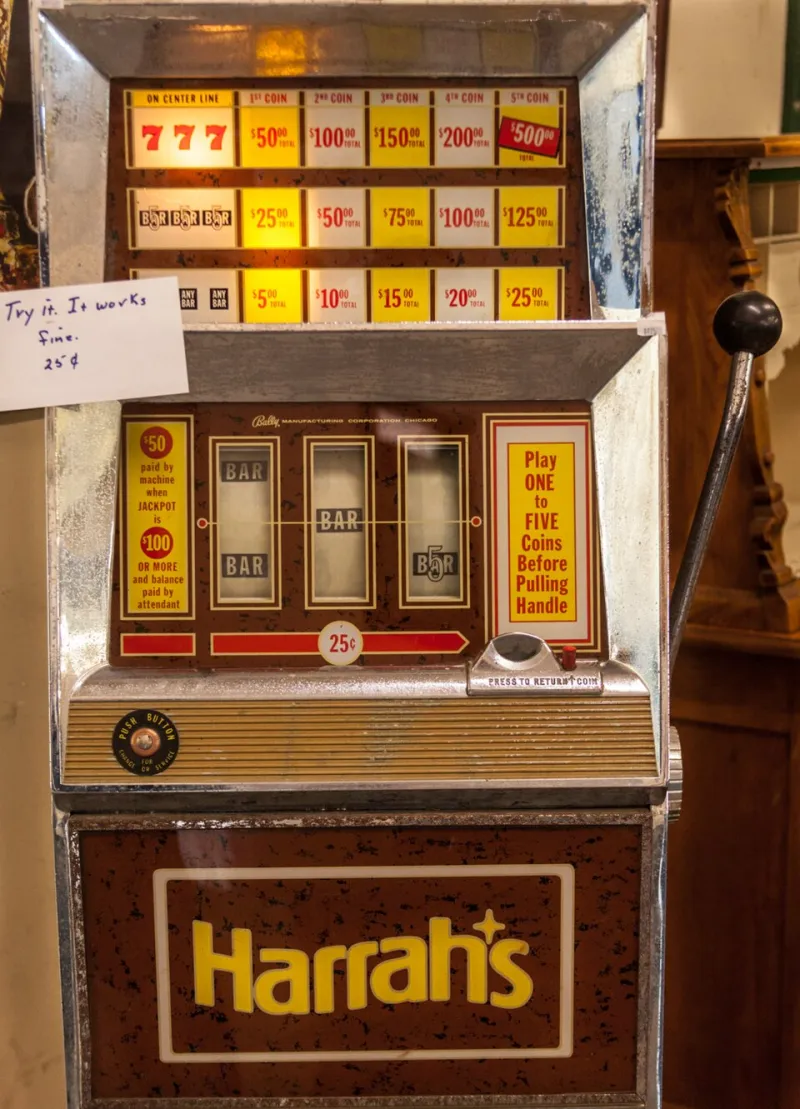
Photo: Norfolk County Council, Ellen Bales, 2006-01-06 12:56:35, CC BY-SA 2.0, via Wikimedia Commons
There's a moment every slot player knows. The first reel locks on a seven. Then the second. Your chest tightens. Your hand hovers. The third reel spins and — nothing. A cherry. A bar. Anything but the seven you needed.
Here's the wild part: statistically, that near-miss carries zero extra meaning. But your brain? Your brain just filed it as evidence.
This is the 777 paradox, and it's way more fascinating — and way more dangerous — than most players ever realize.
Why Seven Feels Special Before You Even Touch a Machine
Long before anyone sat down at a slot machine, the number seven was already loaded with cultural weight. Lucky number seven shows up in American folklore, religious texts, pop songs, and sports jerseys. Seven wonders. Seven deadly sins. Seven-game playoff series. It's baked into the cultural fabric of daily life in a way that almost no other single digit is.
So when game designers needed a symbol to represent the jackpot — the pinnacle of the win — seven was the obvious choice. Not because it has magical properties, but because it already felt important. The casino floor didn't create the seven obsession. It just monetized one that already existed.
By the time you sit down to play, you've had decades of seven-is-special conditioning running in the background. Your brain arrives at the machine already primed.
The Pattern Engine Running 24/7 Inside Your Head
Human beings are, at the most fundamental neurological level, pattern-recognition machines. This is a feature, not a bug. Our ancestors survived because they could detect patterns — seasonal food sources, predator behavior, weather shifts. The brain that noticed "every time those clouds look like this, it rains" stayed alive longer than the brain that didn't.
Fast forward to modern life, and that same hardware is still running. It just doesn't have as many actual survival patterns to track, so it finds patterns everywhere — including places where none exist.
Psychologists call this apophenia: the tendency to perceive meaningful connections between unrelated things. Gamers experience it constantly. You won twice on a Tuesday. You hit a bonus round after switching from your left hand to your right. You had a big night the last time you wore that hoodie. The brain catalogs all of this, cross-references it, and starts building a model — even when the underlying data is pure noise.
Number sequences like 777 are particularly vulnerable to this effect. They're visually symmetrical, culturally charged, and deeply associated with reward in gaming environments. That combination is almost irresistible to a brain that's constantly hunting for structure.
What "Chasing the Pattern" Actually Costs You
Here's where things get expensive.
When players become attached to specific number sequences — whether that's 777 on a slot, a favorite number in roulette, or a betting pattern they swear by — they start making decisions based on imaginary data. They'll stay at a machine longer than planned because it "feels close." They'll increase their bet when a pattern starts forming because it "seems like it's about to hit." They'll avoid a machine that just paid out because "it's cold now."
None of these strategies reflect how random number generators actually work. Modern slot machines — whether you're playing at a physical casino in Vegas or on a platform like WinPH777 — use RNG systems that produce outcomes independently on every single spin. The machine has no memory of the last result. It doesn't know it's "due" for a seven. It doesn't care that you've been waiting forty minutes.
Chasing number patterns doesn't improve your odds. It just burns through your bankroll while your brain convinces you that you're being strategic.
The Near-Miss Effect: When Almost Winning Feels Like Almost Winning
One of the most studied phenomena in gambling psychology is the near-miss — and 777 sequences are basically near-miss generators by design.
When two sevens line up and the third lands just above or below, your brain registers something closer to a win response than a loss response. Dopamine releases. Attention sharpens. The urge to try again intensifies. Researchers have found that near-misses actually increase play duration more effectively than small wins do — which is a remarkable and slightly unsettling finding.
Game designers understand this deeply. The visual layout of reel slots, the frequency of two-out-of-three matches, the sound design that plays up a near-miss — none of that is accidental. It's engineered to keep the pattern-recognition engine in your brain engaged and hopeful.
Knowing this doesn't make you immune to it. But it does give you a fighting chance to recognize the feeling for what it is: a neurological response, not a signal.
Breaking the Ritual Without Breaking the Fun
Here's the thing — you don't have to become a cold, joyless statistician to enjoy gaming. The goal isn't to strip out all the ritual and superstition and fun. It's to understand which parts of your behavior are genuine strategy and which parts are your brain running its pattern software on incomplete data.
A few practical ways to do that:
Set limits before you feel the pull. Decide on a session budget before you start, not after the first near-miss. Pre-commitment works because it happens before the dopamine loop kicks in.
Notice when you're chasing. If you find yourself staying at a machine or a game specifically because it "feels close," that's the pattern engine talking. Step back and ask whether the logic holds up outside the moment.
Rotate your games. Players who develop strong attachments to specific machines or number sequences tend to play longer and lose more than players who stay flexible. Variety disrupts the ritual cycle.
Treat the near-miss as a loss. Because it is one. Emotionally reframing it that way takes practice, but it's one of the most effective cognitive tools available.
Seven Is Still Fun — Just Not Magic
None of this means 777 isn't worth celebrating when it hits. Landing the jackpot sequence is genuinely exciting, and the cultural mythology around it is part of what makes casino gaming entertaining in the first place. The imagery, the sound, the lights — that's all part of the experience, and there's nothing wrong with enjoying it.
The problem isn't loving the number. The problem is believing the number loves you back.
Your brain is extraordinarily good at finding patterns. In gaming, that skill mostly works against you, because the patterns it finds aren't real. The sooner you can appreciate that tension — the gap between what your brain insists it sees and what the math actually says — the smarter and more intentional your play becomes.
Seven is a great number. It's just not a strategy.