Why Your 'Unbeatable System' Is Just Overconfidence With a Spreadsheet

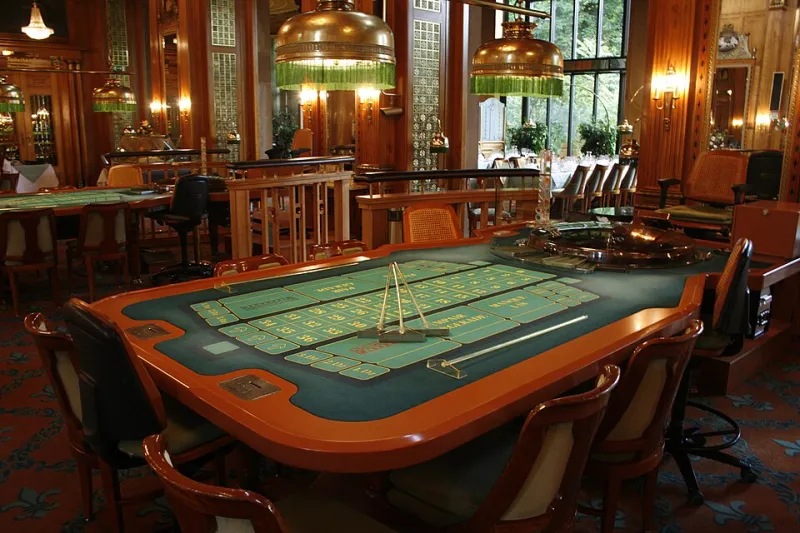
Photo: Gary Todd, CC0, via Wikimedia Commons
The System Was Working. Then It Wasn't.
Every serious player has a version of this story. You hit a solid run early on — maybe it was blackjack, maybe slots, maybe sports betting lines — and something clicked. You started noticing patterns. You adjusted your bet sizes. You built a little framework, maybe even wrote it down. For a while, it worked.
Then it stopped working. And instead of questioning the system, most players question their execution of it.
That's the trap. Not the losing — that's just variance doing its thing. The trap is the belief that the system was ever real in the first place.
What a 'System' Actually Is
Let's be honest about what most betting systems look like in practice. You're tracking outcomes, identifying sequences, and assigning meaning to streaks. You're betting bigger after a win, or smaller after a loss, or you're waiting for the third consecutive red before you drop chips on black. It feels deliberate. It feels smart.
Behavioral economists have a name for the mental process driving all of this: apophenia — the tendency to perceive meaningful patterns in random data. Your brain is extraordinarily good at finding structure where none exists. It's not a flaw, exactly. Pattern recognition kept our ancestors alive. But in a casino environment or on an online gaming platform, that same wiring becomes a liability.
Dr. Daniel Kahneman's research on cognitive bias — the kind that earned him a Nobel Prize — showed that humans consistently overestimate the predictability of random sequences. We expect outcomes to "balance out." We treat past results as informative about future ones. And we build systems on top of those false assumptions.
The Data Doesn't Lie (But Your Memory Does)
Here's where it gets uncomfortable. When researchers analyze large samples of player behavior data across online gaming platforms, a consistent pattern emerges: players using structured betting systems don't outperform players making essentially random wager decisions — and in many cases, they actually underperform them.
Why? A few reasons.
First, systems often encourage larger bets during losing streaks (Martingale-style doubling) or during perceived "hot" conditions. Both scenarios increase variance exposure at exactly the wrong moments.
Second, system-users tend to stay at the table longer. The structure gives them a reason to keep going — there's always one more step in the process, one more condition to wait for. Extended play sessions mean more house edge exposure, full stop.
Third — and this is the sneaky one — players using systems are more likely to misremember their results. Because the system provides a narrative framework, wins feel like confirmation and losses feel like anomalies. Over time, your memory of your own performance becomes genuinely unreliable.
The Martingale Myth and Its American Cousins
The Martingale system is the granddaddy of all betting frameworks — double your bet after every loss until you win, then reset. On paper, it looks bulletproof. In practice, it runs into two walls: table limits and bankroll limits. Both of which exist specifically because casinos figured this out a long time ago.
But Martingale has plenty of American cousins that get less attention. The Paroli system (double after wins instead of losses). The D'Alembert (gradual increases and decreases). The Fibonacci sequence applied to bet sizing. Sports bettors have their own versions — unit systems, Kelly Criterion derivatives, fade-the-public frameworks.
None of them change the underlying math. They change how you feel about the math. And that distinction matters enormously.
So Why Do Systems Feel So Good?
This is the part that doesn't get talked about enough: betting systems provide genuine psychological value, even when they provide zero statistical value. That's not nothing.
Having a system means you're not just reacting emotionally. It creates a sense of agency in an environment where you have very limited actual control. It gives you something to evaluate after a session beyond "I won" or "I lost." It makes the experience feel more like skill-based competition and less like chance.
For a lot of players, that feeling is part of what they're paying for. And as long as you understand that's what you're paying for, there's nothing inherently wrong with it.
The danger is when you start believing the system is giving you an actual edge. That's when the psychological comfort of structure becomes a financial liability.
The Overconfidence Tax
Researchers at the University of California studied investor behavior and found that overconfident investors — those who traded most actively based on their own predictions — consistently underperformed the market compared to passive investors. The parallel to gaming is direct: the more convinced you are that your system is working, the more aggressively you tend to deploy it, and the bigger your exposure when variance turns against you.
Call it the overconfidence tax. You pay it every time you increase your stakes because you think you've figured something out. You pay it every time you extend a session because your system says conditions are favorable. You pay it in the form of decisions that feel disciplined but are actually just dressed-up emotional responses.
The players who consistently manage their bankrolls best aren't the ones with the most sophisticated systems. They're the ones who've genuinely internalized the randomness of the game and make decisions based on what they can afford to lose, not what they expect to win.
Playing Smart Without Playing Fooled
None of this means you should walk into a session without any structure at all. Bankroll limits, session time caps, win/loss thresholds — these are all genuinely useful tools. But notice what they have in common: they're about managing your behavior, not predicting the game's behavior.
That's the distinction that matters. A system that says "I'll stop when I'm down 20%" is a risk management tool. A system that says "I'll bet big on the seventh spin because the last six were low" is a cognitive bias in a trench coat.
At WinPH777, the games are built to be entertaining, unpredictable, and genuinely exciting. That unpredictability isn't a bug — it's the whole point. The spin doesn't know what the last spin did. The cards don't owe you anything. And your spreadsheet, as satisfying as it is to build, isn't changing any of that.
The real edge — the only one that's actually available to you — is knowing exactly that, and playing accordingly.